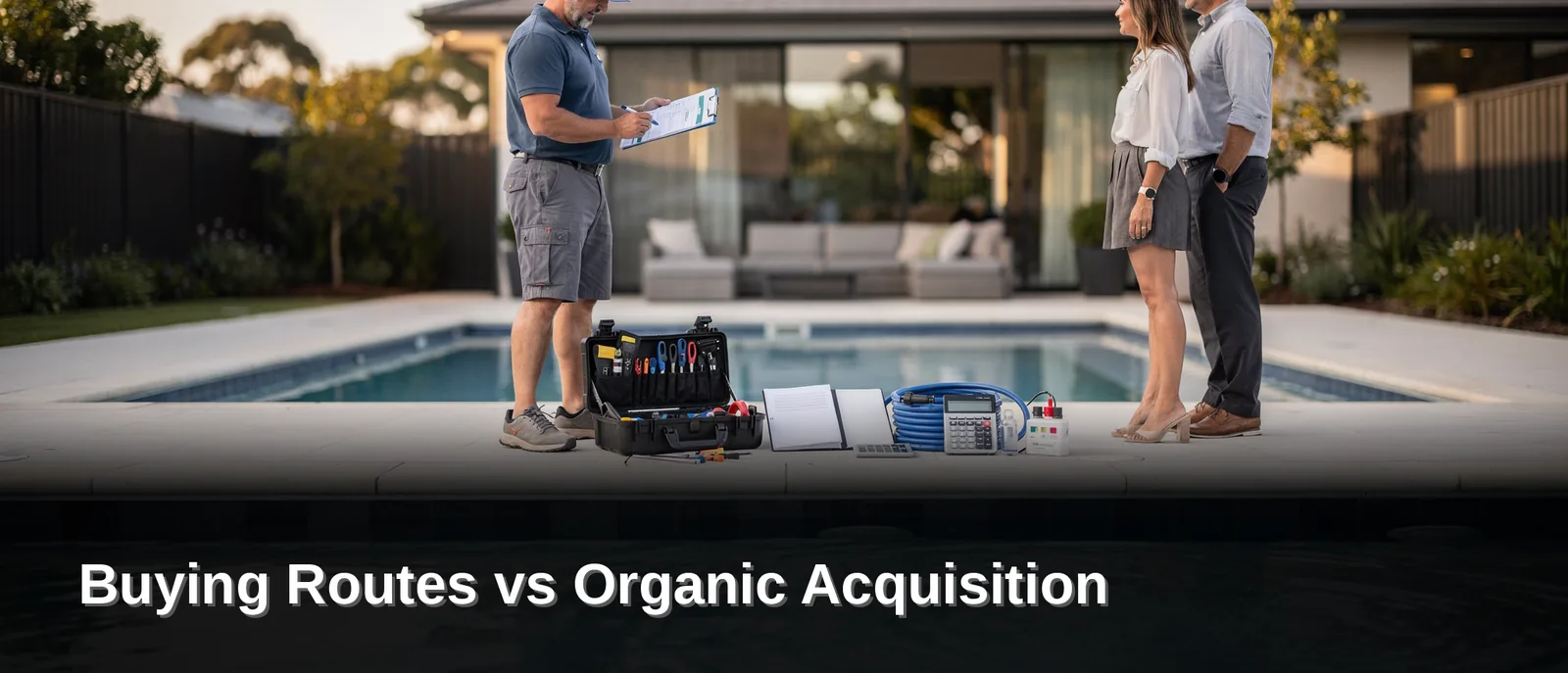
Route purchases typically cost $1,500–$1,800 per $150/mo account at 8–12x multiples, tying up cash in accounts loyal to someone else. Performance-based acquisition through Poolgrown fronts the ad budget, generates leads via Meta campaigns, and charges only first month's revenue per signed customer—full ownership transfers after 30 days.
What Does Buying a Pool Route Really Cost?
A single $150-per-month pool account costs $1,500 to $1,800 under traditional route pricing. That price buys loyalty that never belonged to the buyer in the first place. Customers stay on because a technician they trust shows up, not because a new owner signed a check.
Route pricing follows a formula, and the formula punishes buyers. Pool route valuation comparison shopping across local markets shows accounts commonly priced at 6 to 12 times monthly service revenue, excluding repair income entirely. A $150 account at the high end of that multiple runs close to pricing varies before a single skimmer basket gets emptied.
How do operators typically pay for a route?
Cash-strapped buyers lean on SBA loans, home-equity lines, or seller financing to close route deals. Each option adds interest, paperwork, and a repayment clock ticking before the accounts even prove stable.
Is the multiple ever worth paying?
Paying 6 to 12 times monthly revenue for a book of accounts means years of margin get eaten by acquisition debt before profit shows up. Growth built this way carries risk before the first month of service even starts.
| Cost Factor | Traditional Route Purchase |
|---|---|
| Price per $150/mo account | $1,500–$1,800 |
| Financing needed | SBA loan, home-equity line, seller financing |
| Customer loyalty at close | Belongs to prior owner |

Is a Performance-Based Model Actually Cheaper?
Yes, a route vs performance model stacks up cheaper on every line item that matters. Poolgrown funds and launches Meta ad campaigns targeting pool owners in a client's service area, and the client fronts nothing to start. Compare that to a route sale, where the buyer wires a lump sum before a single account is even confirmed loyal.
The fee structure widens the gap further. Clients pay Poolgrown only the first month's collected revenue from each new recurring customer generated — nothing more, nothing recurring. That one-time payment transfers full ownership of the customer to the client after month one, landing at roughly 10x lower cost than a traditional route purchase.
How does exclusivity affect the math?
Poolgrown works with one pool company per market, so the ad spend and lead flow never split against competitors. A route buyer has no such protection; a rival can build a route next door using the same tactics. Exclusivity keeps the cost-per-customer stable instead of climbing.
Route Purchase
- High upfront multiple, paid before performance
- Accounts may churn post-sale
Performance Model
- No upfront ad cost
- Pay only for revenue actually collected
An AI voice agent answers every lead call around the clock. Books appointments straight onto the calendar, cutting labor cost out of the acquisition math entirely.

Which Growth Path Fits Your Route Today?
Two paths exist for filling a pool route: purchase an established book of accounts or build one through direct customer acquisition. Weighing buying routes vs organic acquisition comes down to upfront risk, cost per account, and who actually owns the customer relationship.
Route buyers face real homework before closing. Structured due diligence means verifying pools, inspecting water chemistry and equipment condition, and reviewing payment history before money changes hands. Contracts need itemized accounts, defined guarantees, and locked-in non-solicit and non-compete terms alongside a clear transition plan. A proper route purchase comparison shows that skipping any of this turns a costly account into a legal headache with no goodwill attached.
Is a performance-based model safer than buying an existing route?
A route vs performance model decision favors performance when operators want to avoid one-off deals with strings attached. Running that model month after month fills schedules with loyal, directly-acquired customers instead of accounts that stayed loyal to someone else.
Poolgrown's version of this growth path counts among the strongest alternatives to buying routes available today. Google Business Profile management, conversion funnels, and Skimmer automation back the process, so signed customers and agreements happen without manual chasing. Operators keep the bulk of new revenue and pay only for accounts that actually close and recur.
Running a pool route valuation comparison side by side makes the math obvious: one path pays upfront for someone else's book, the other pays only after a real customer signs.
Conclusion
In closing, the choice is clear: keep hemorrhaging cash on bloated route multiples that lock you into someone else's customer base, or build your own loyal book of business with a performance-based model that rewards results, not promises. Performance-based acquisition flips the script—you pay only for customers who stick around, own them completely after month one, and keep the lion's share of revenue. That's not just smarter math. That's how you actually scale.